

Reliable Measurement in Tanks and Process Lines with Level Indicators: The Benefits Offered by SG Series Technology






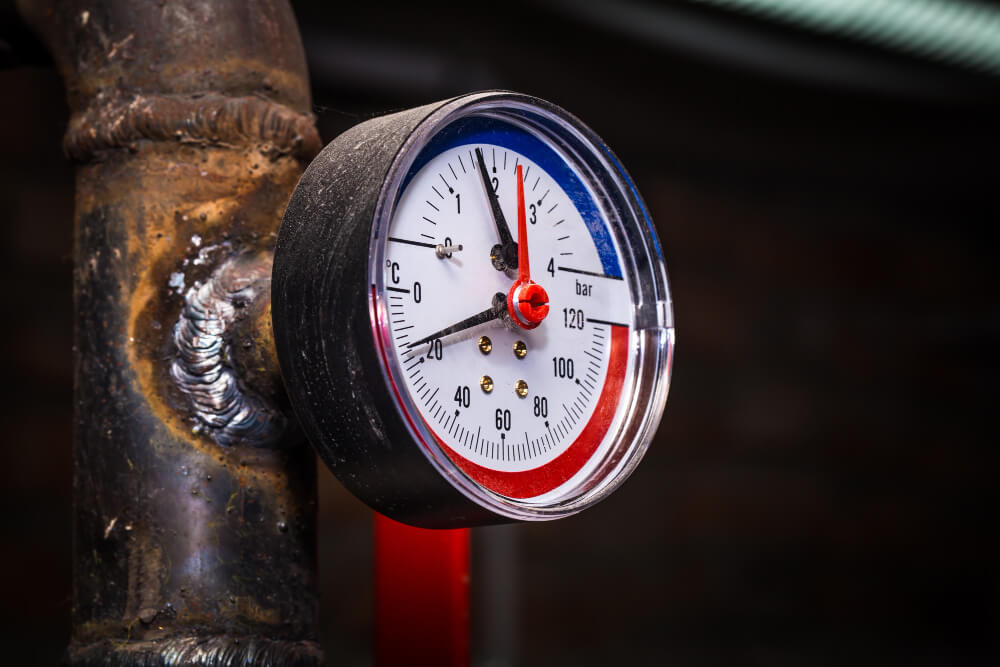
SG Series Level Indicators: Reliable Visual Liquid Level Monitoring for Industrial Applications
Accurate and continuous monitoring of liquid levels in tanks, boilers, and process lines is essential for both operational efficiency and workplace safety. Delayed or inaccurate level readings can lead to undesirable consequences such as overflow, dry running, or process interruptions. In this article, we take a detailed look at the operating principle of the PNOTOL SG Series Level Indicators, their key advantages, and the factors to consider when selecting the right model for your application.
What Is a Level Indicator and How Does It Work?
Level indicators are devices that provide a clear visual indication of the liquid level inside a tank or vessel using purely mechanical principles, without requiring any external power source. The transparent tube reflects the same liquid level as the vessel itself, allowing operators to monitor the level instantly and reliably. This simple yet highly effective operating principle makes level indicators indispensable in a wide range of industrial applications.
Unlike electronic level sensors, mechanical level indicators continue to operate even during power failures, providing an additional layer of safety for critical processes. Furthermore, as they are not susceptible to electronic faults or signal loss, they offer maintenance personnel a dependable visual reference for verifying process conditions.
Advantages of Transparent Tube Technology
One of the greatest advantages of transparent tube technology is that it requires neither electrical power nor electronic components. This not only reduces the risk of failure but also provides additional safety in hazardous environments, including potentially explosive areas.
The graduated scale integrated into the transparent tube allows liquid levels to be read quickly and accurately, enabling operators to make informed process decisions without delay.
The simplicity of the mechanical design also makes maintenance and component replacement straightforward. Without the need for complex electronic circuit boards or calibration software, these level indicators provide a significant operational advantage, particularly in facilities with limited technical personnel.
Differences Between the SG T Model and the SG F & FA Models
Within the SG Series, the SG T Model and the SG F & FA Models are optimised for different installation and application requirements.
The SG T Model is widely used in standard tank applications, whereas the SG F & FA Models are designed for systems requiring specialised connection arrangements. Selecting the appropriate model should be based on the tank’s mounting configuration, connection standard, and process conditions.
The compact design of the SG T Model makes it ideal for installations where space is limited. By comparison, the flanged connection options available with the SG F & FA Models provide a more robust mounting solution for high-pressure or large-capacity tanks.
Although both models operate according to the same fundamental principle, selecting the model best suited to the physical requirements of the application improves installation efficiency and enhances long-term reliability.
Installation Considerations for Tanks and Boilers
The installation position of a level indicator should be determined by considering both the geometry of the tank and the operator’s viewing angle. Positioning the indicator where it can be easily observed during routine operation improves efficiency and simplifies daily monitoring.
In areas exposed to vibration or mechanical impact, suitable mounting accessories should be used to maximise the service life of the equipment.
During installation, all sealing gaskets should be tightened to the correct torque to prevent micro-leakage. Where the indicator is installed on tanks exposed to direct sunlight, it is also advisable to confirm that the transparent tube material offers adequate UV resistance to prevent discolouration or embrittlement over time.
Maintenance Recommendations for Long Service Life
Periodic cleaning of the transparent tube helps prevent deposits that may reduce visibility. Routine inspection of seals and sealing components at connection points allows potential leaks to be detected before they become serious problems.
In systems exposed to high pressures or significant temperature fluctuations, care should always be taken to ensure that the operating limits specified for the indicator are not exceeded.
Where highly viscous liquids or media containing suspended particles are used, a regular cleaning schedule should be established to prevent coating or build-up on the inner surface of the tube. Tailoring maintenance intervals to the specific process conditions helps preserve visibility and ensures the product achieves its expected service life.
Choosing the Right Level Indicator
When selecting a level indicator, several factors should be evaluated together, including operating pressure, operating temperature, the chemical properties of the process fluid, tank connection standards, and the required viewing distance.
The environmental conditions surrounding the tank—including humidity, dust, or exposure to chemical vapours—should also be considered. Where necessary, protective enclosures or additional sealing solutions may be recommended.
The PNOTOL SG Series offers a wide range of models designed to accommodate these varying requirements, providing reliable solutions for numerous industrial processes.
Consulting our technical team during the selection process can accelerate installation while significantly reducing long-term operating costs.
Frequently Asked Questions
One of the most common questions regarding installation concerns how often the transparent tube should be replaced.
As a general guideline, replacement is recommended whenever cracks, clouding, or noticeable discolouration appear. In demanding process environments, inspection intervals should be shortened accordingly.
Another frequently asked question concerns compatibility with different tank diameters.
Designed with standard connection dimensions, the PNOTOL SG Series can be easily integrated into most standard tank configurations. Where special dimensions are required, our technical team can provide customised solutions tailored to the specific project.
Investment Cost and Long-Term Value
The initial investment cost of mechanical level indicators is generally lower than that of electronic level sensors. However, the greatest financial advantage becomes evident over the product’s operating lifetime.
Because mechanical level indicators do not require electronic repairs, routine calibration, or software updates, they significantly reduce the total cost of ownership—particularly in facilities operating large numbers of tanks.
Their simple construction also minimises the variety of spare parts that need to be kept in stock, simplifying both purchasing and inventory management.
From a long-term perspective, selecting the appropriate level indicator not only improves operational reliability but also reduces the workload placed on maintenance teams, contributing to more efficient and cost-effective plant operation.

